
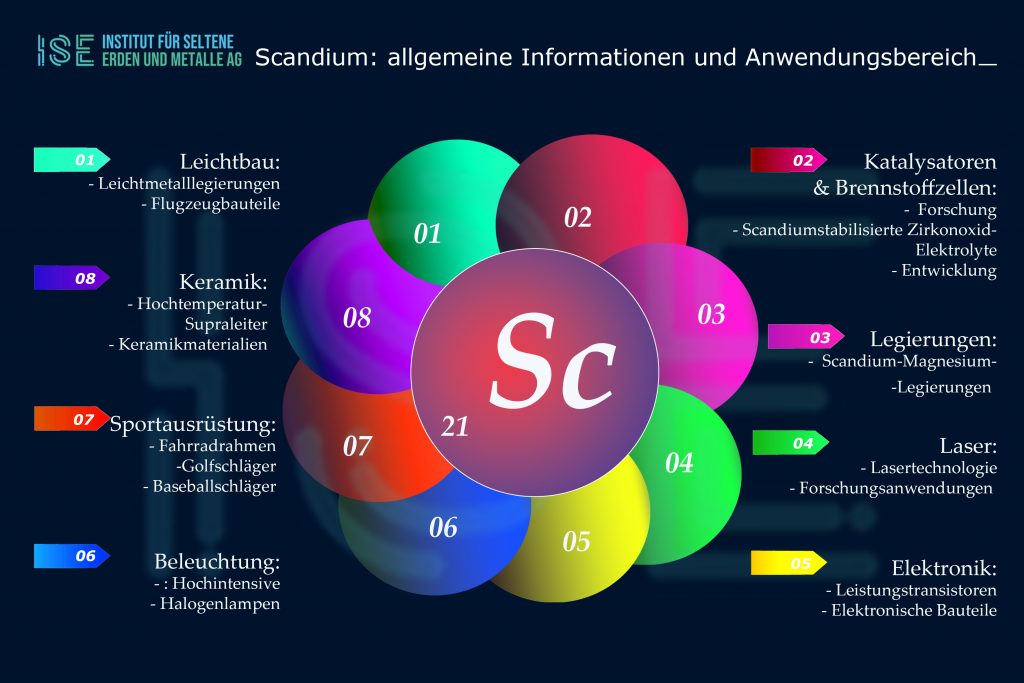
Scandium is one of the smallest and least transparent markets among the technologically important metals. Although the element is not exceptionally rare in the Earth’s crust, economically usable concentrations are uncommon. It is therefore normally recovered as a by-product of nickel, cobalt, titanium, uranium or zirconium production.
From a Soviet strategic material to a concentrated market
During the Cold War, Soviet research demonstrated the value of scandium in aluminium alloys. Even small additions can improve strength, weldability, heat resistance and corrosion behaviour. These properties make aluminium-scandium alloys attractive for aircraft, space technology, high-performance vehicles and other weight-sensitive applications.
Today, scandium supply remains concentrated in only a few countries. Production volumes are small and public market data are limited. This creates a classic market dilemma: industrial users hesitate to design products around a material with uncertain availability, while producers hesitate to invest without reliable demand.
Potential for energy and climate technologies
Scandium is also used in solid-oxide fuel cells, specialised ceramics, lighting and selected electronic applications. A secure and affordable supply could expand its use in hydrogen technology, aerospace and advanced manufacturing.
A strategic supply challenge
For Europe and North America, building a more diverse supply chain requires recovery from existing mining streams, recycling, long-term purchase agreements and transparent quality standards. The decisive issue is not simply geological availability, but the ability to produce consistent, high-purity material at an economically viable price.